
The working principle can be broken down into the coordinated operation of four core modules: the power system, hydraulic system, mechanical transmission system, and control system.
Power System: The Source of Energy
The power source of an excavator is usually a diesel engine (some small models use electric or hybrid power), with power ranging from tens to hundreds of kilowatts. Taking a medium-sized excavator as an example, the engine produces high-temperature, high-pressure gas by burning diesel, driving the crankshaft to rotate and converting chemical energy into mechanical energy. During this process, the engine's speed and torque directly determine the excavator's operational efficiency-for instance, when digging in hard soil layers, high torque output is required to overcome resistance; while for fast loading operations, high speed is needed to increase movement speed. The engine's cooling system (such as water or air cooling) and fuel injection technology (such as electronically controlled high-pressure common rail) further optimize energy efficiency and emissions, meeting modern construction machinery environmental standards.
Hydraulic System: The Core of Precise Control
The hydraulic system is the "muscle" of the excavator, transmitting pressure through hydraulic oil to drive the boom and bucket to complete complex movements. Its core components include the hydraulic pump, hydraulic motor, hydraulic cylinder, and control valve group. Driven by the engine, the hydraulic pump converts mechanical energy into hydraulic energy, generating high-pressure oil flow; the control valve group (such as a multi-way directional valve) acts like a "traffic controller," regulating oil flow direction, volume, and pressure to control the movements of different actuators. For example, when the operator pushes the lever forward, the control valve directs high-pressure oil into the piston chamber of the boom hydraulic cylinder, raising the boom; in reverse, the oil flows into the other chamber, lowering the boom. The hydraulic system's pressure range is usually between 20-40MPa, and the high-pressure design ensures stability under heavy load conditions. Additionally, modern excavators generally use load-sensing hydraulic systems, which automatically adjust the pump's output flow according to load demands, reducing energy waste and improving fuel efficiency.
Mechanical Transmission System: The Bridge of Power Transfer
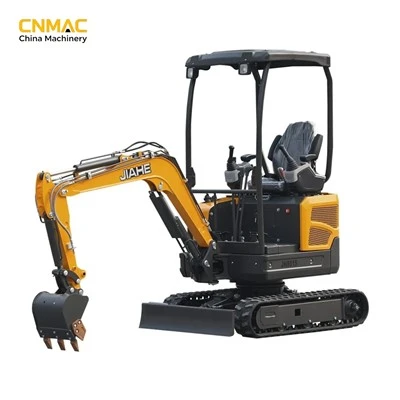
The mechanical transmission system converts the power from the hydraulic system into the actual movement of the boom and bucket. Its structure includes four main components: the boom, stick, bucket, and rotating platform, connected by pins to form a multi-joint structure. The boom acts as the excavator's "upper arm," with one end connected to the rotating platform and the other end connected to the stick, allowing lifting and lowering through the extension and retraction of the hydraulic cylinder. The stick functions like a "forearm," connecting the boom and the bucket, and controlling forward and backward swing via another set of hydraulic cylinders. The bucket serves as the "hand," driven by a hydraulic motor to rotate the gear ring, enabling digging and dumping actions. The rotating platform is the "waist" of the excavator, driven by a swing hydraulic motor to rotate the gear transmission, allowing the entire upper structure to rotate 360 degrees horizontally, greatly enhancing operational flexibility. The mechanical components are typically made of high-strength alloy steel (such as Q345B) and undergo heat treatment processes (like quenching and tempering) to improve wear resistance and impact resistance, ensuring long-term use under harsh conditions.
Control System: The Intelligent "Brain"
The control system of modern excavators has upgraded from traditional mechanical operation to electronic control, achieving precise operation through sensors, ECU (Electronic Control Unit), and human-machine interfaces. Sensors (such as pressure sensors, angle sensors, and speed sensors) monitor parameters like hydraulic system pressure, boom angle, and engine speed in real time, sending data back to the ECU. The ECU adjusts the opening of hydraulic valves and engine throttle according to preset programs or operator commands, achieving smooth movement control and reasonable power distribution. For example, when digging hard soil layers, the system automatically increases hydraulic pressure and reduces movement speed to prevent mechanical overload; during fast loading, it increases movement speed and optimizes fuel consumption. Some high-end models are also equipped with GPS positioning and remote monitoring systems, which can transmit equipment location, operating status, and fault codes in real time, facilitating remote management and maintenance.