
The Environments Where It Performs Best
Soft, muddy, and wet ground is where it really shines. The tracks distribute the machine's weight over a larger contact area, resulting in low ground pressure. On rain-soaked jobsites, backfilled soil, sandy ground, and riverbanks, a wheeled skid steer may quickly lose traction and dig itself into the ground. A tracked machine can stay on the surface and keep working without turning the site into a mud pit.
Finished landscapes and residential yards are another good application. On lawns, gardens, and paved patios, wheeled machines can leave deep tire tracks, while a tracked machine generally causes much less surface damage, making it a better choice when protecting the existing landscape is a priority.
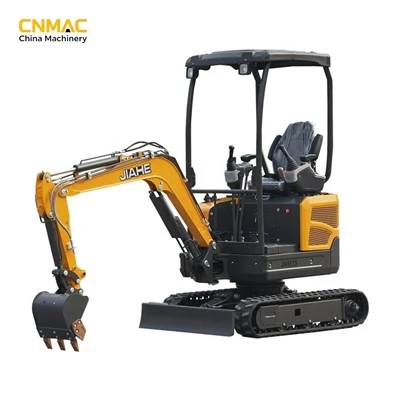
Narrow, restricted-access areas are where it really earns its keep. Standard residential gates, side passages, and narrow gaps between buildings may be too tight for a conventional skid steer. A Mini Track Skid Steer can fit through these restricted openings and reach areas that larger machines simply cannot. That is one of its biggest advantages-it can take on jobs that larger equipment cannot physically access.
Indoor work and low-clearance demolition are also well suited to it. Its compact size allows it to pass through doorways, while rubber tracks are gentler on finished floors than conventional tires. With its low overall height, it can work in underground parking garages, workshops, warehouses, and interior strip-out projects where working space is limited.
Snow, ice, and sloped terrain are other environments where it has an advantage. The tracks provide strong traction and a stable footprint, while the low center of gravity helps the machine remain more stable on moderate slopes compared with a wheeled skid steer.
Another major application is small residential and backyard work, such as fence installation, small-scale excavation, tree pits, backyard grading, and material handling. These jobs are often too small to justify using a large machine, while doing them manually takes too much time. A Mini Track Skid Steer fits neatly between the two.
Environments Where You Need to Be More Careful
Long-term operation on hard surfaces requires caution. Frequent turning on concrete and asphalt can accelerate rubber track wear, while aggressive pivot turns may leave black marks or even damage finished surfaces. If most of the machine's working hours are spent on hard surfaces, a wheeled skid steer may be the more economical option.
If the machine needs to travel between jobsites frequently or cover long distances, a tracked machine can be less convenient. Its travel speed is generally lower, and long-distance transportation typically requires a trailer or other transport vehicle.
Heavy-duty, high-volume loading is also not its strongest application. Due to its compact size, its lifting capacity and stability are more limited than those of a standard-size skid steer or compact wheel loader. For handling large piles of soil or continuously loading trucks, a larger skid steer or compact wheel loader is usually a better choice.
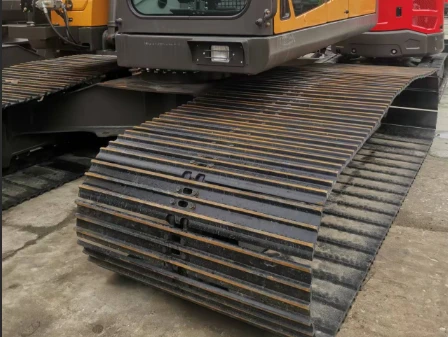
Demolition sites filled with construction debris also require extra attention. Exposed rebar, sharp steel, broken concrete, and angular rocks can cut or damage rubber tracks. In these conditions, the undercarriage should be inspected frequently, or a more durable track configuration should be considered.
Finally, tracks are wear components, and replacement costs are generally higher than those for conventional tires. The more frequently the machine operates on hard, abrasive, or rough surfaces, the more noticeable this cost difference becomes.
In short, Mini Track Skid Steer is best suited to soft ground, finished landscapes, narrow-access sites, indoor and low-clearance work, slopes, and small residential projects. For predominantly paved surfaces, long-distance travel, heavy loading, or demolition sites with large amounts of sharp debris, a wheeled skid steer or a more heavy-duty tracked configuration may be a better fit.