



Hey there! As a loader supplier, I often get asked about different aspects of loaders, and one topic that comes up quite a bit is the "use" property in a loader rule in webpack. Now, you might be thinking, "Webpack? What's that got to do with loaders?" Well, stick with me, and I'll break it down for you.
First off, let's talk a bit about webpack. Webpack is a powerful module bundler that's widely used in the world of web development. It takes all your different assets like JavaScript, CSS, images, and more, and bundles them into one or more files. This helps in optimizing your application's performance and making it easier to manage.
Now, the "use" property in a loader rule in webpack is a crucial part of how you tell webpack what to do with different types of files. In a nutshell, loaders in webpack are used to transform files before they are added to the bundle. For example, if you have a CSS file, you might want to use a loader to convert it into JavaScript so that it can be included in your bundle.
The "use" property is where you specify which loaders you want to use for a particular file type. It can take an array of loaders, and the loaders are applied in reverse order. That means the last loader in the array is applied first, and then the others follow.

Let's look at an example. Suppose you have a JavaScript file, and you want to use Babel to transpile it to a more compatible version of JavaScript. You can set up a loader rule like this:
module.exports = {
  module: {
    rules: [
      {
        test: /\.js$/,
        use: ['babel-loader']
      }
    ]
  }
};
In this example, the test property is a regular expression that matches all files with the .js extension. The use property specifies that we want to use the babel-loader to transform these files.
Now, as a loader supplier, I know that different loaders have different use cases. For instance, if you're working with images, you might want to use a loader like file-loader or url-loader. file-loader simply copies the image file to the output directory and returns the public URL of the file. url-loader, on the other hand, can convert small images to base64-encoded strings and include them directly in the bundle, which can save on HTTP requests.
Let's say you have an image file, and you want to use file-loader to handle it. You can set up a loader rule like this:
module.exports = {
  module: {
    rules: [
      {
        test: /\.(png|jpg|jpeg|gif)$/i,
        use: ['file-loader']
      }
    ]
  }
};
This rule will match all PNG, JPG, JPEG, and GIF files and use the file-loader to handle them.
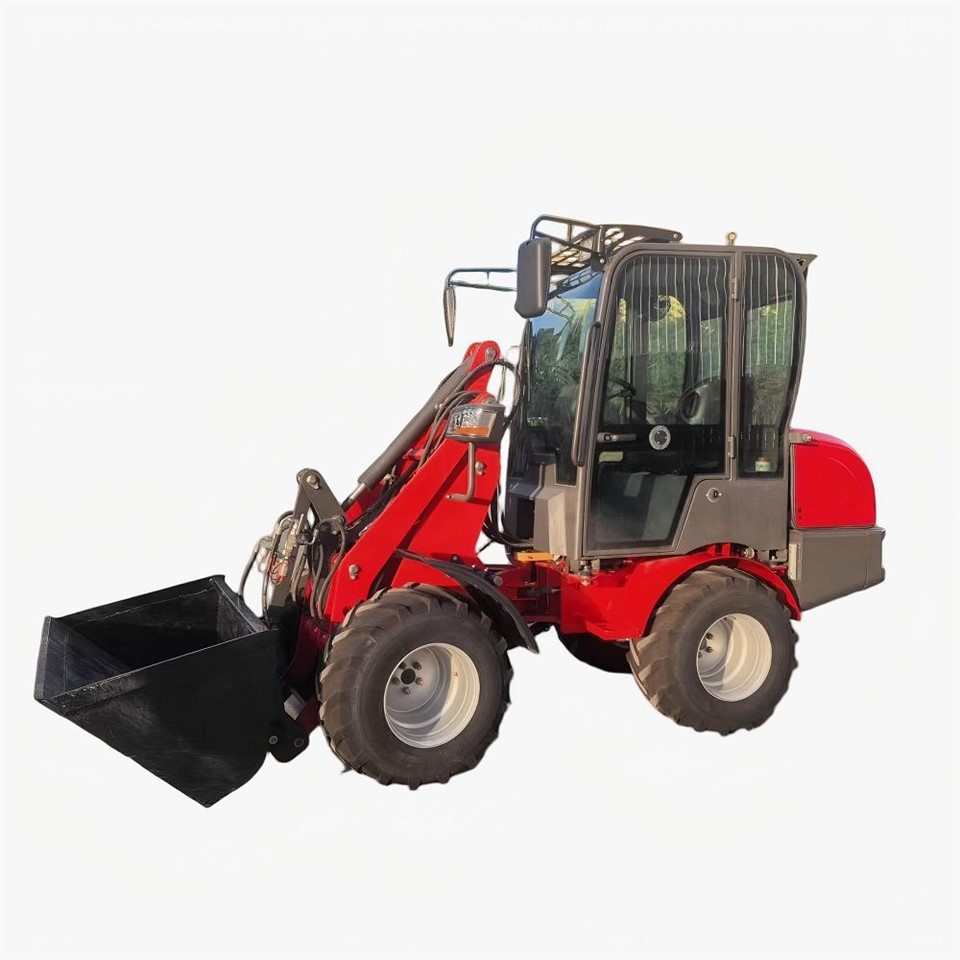
Now, let's talk about some of the loaders we offer. We have a great range of loaders, including the 5T Wheel Loader | 656, the 600kg Hydrostatic Loader | JH7706, and the 1.2T Wheel Skid Steer | JH7120. These loaders are designed to meet different needs and applications.
The 5T Wheel Loader | 656 is a heavy-duty loader that's perfect for large-scale construction and mining projects. It has a powerful engine and a high lifting capacity, making it ideal for moving large amounts of material.
The 600kg Hydrostatic Loader | JH7706 is a more compact loader that's great for smaller jobs and tight spaces. It uses hydrostatic transmission, which provides smooth and efficient operation.
The 1.2T Wheel Skid Steer | JH7120 is a versatile loader that can be used for a variety of tasks, from landscaping to snow removal. It has a skid-steer design, which allows it to turn in a very small radius, making it easy to maneuver in tight spaces.
When it comes to choosing the right loader for your project, it's important to consider your specific needs and requirements. Think about the type of material you'll be moving, the size of the job, and the working conditions. If you're not sure which loader is right for you, our team of experts is here to help. We can provide you with detailed information about each loader and help you make an informed decision.
In addition to our great range of loaders, we also offer excellent customer service and support. We understand that buying a loader is a big investment, and we want to make sure you're completely satisfied with your purchase. That's why we offer a comprehensive warranty on all our loaders and provide ongoing maintenance and repair services.
If you're interested in learning more about our loaders or have any questions, please don't hesitate to get in touch. We'd love to hear from you and help you find the perfect loader for your project. Whether you're a small business owner or a large construction company, we have the right loader for you.
So, there you have it! That's a brief overview of what the "use" property in a loader rule in webpack is and how it relates to loaders in general. I hope this has been helpful, and if you have any more questions, feel free to ask.
References:
- Webpack official documentation
- Loader development resources


