



Hey there, fellow equipment enthusiasts! As a supplier of wheel loaders, I often get asked about how different components of these machines work. One question that comes up quite a bit is about the differential lock on a wheel loader. So, today, I'm going to break it down for you and explain how a wheel loader's differential lock works.
What's a Differential Anyway?
Before we dive into the differential lock, let's quickly talk about what a differential is. In a wheel loader, the differential is a key part of the drivetrain. Its main job is to allow the wheels on the same axle to rotate at different speeds. This is super important when the loader is turning. When you make a turn, the outer wheel has to cover a greater distance than the inner wheel. If all the wheels were forced to rotate at the same speed, it would cause a lot of stress on the tires and the drivetrain, and the loader would have a hard time turning smoothly.

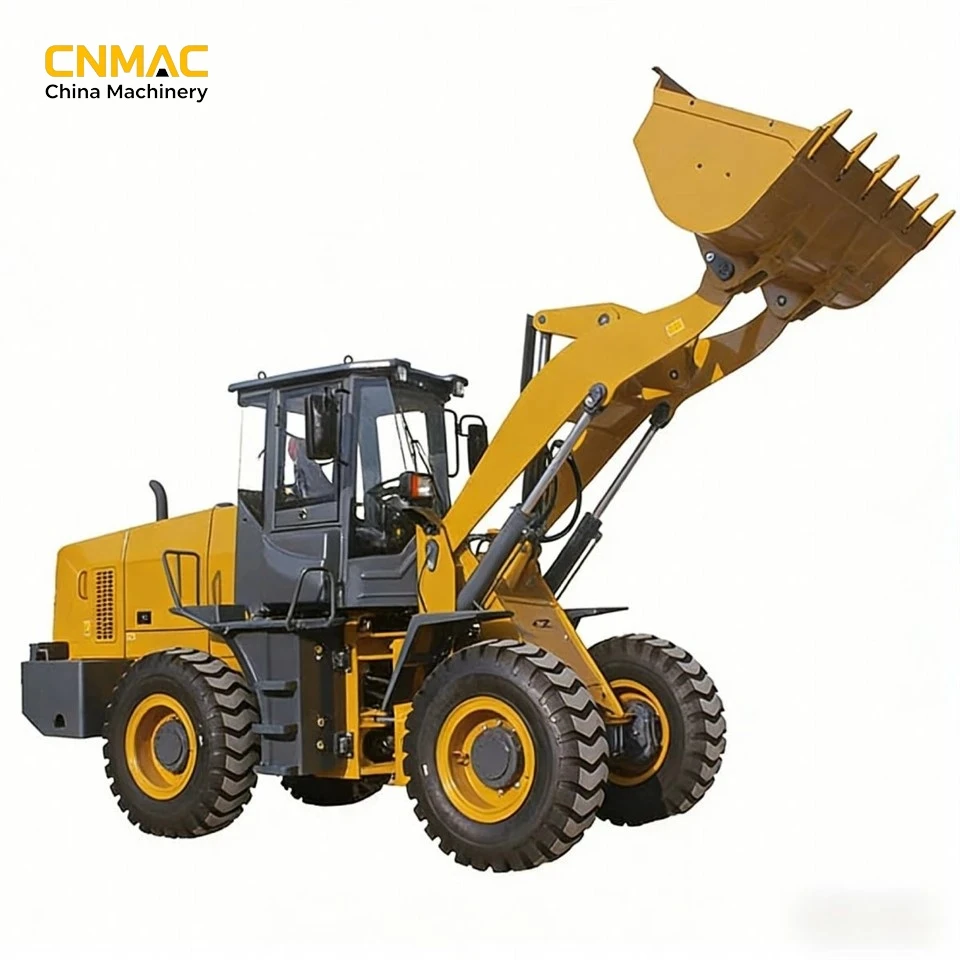
The differential uses a set of gears to split the power from the engine between the two wheels on an axle. It allows one wheel to spin faster than the other while still delivering power to both. This makes it possible for the wheel loader to maneuver around corners and uneven terrain with ease.
The Problem with a Regular Differential
While a regular differential is great for normal driving and turning, it has a bit of a drawback. When one wheel loses traction, like when it's on ice, mud, or a slippery surface, the differential will send most of the power to that wheel. This is because the wheel with less resistance (the one that's slipping) can rotate more freely. As a result, the wheel with traction doesn't get enough power, and the loader can get stuck.
Enter the Differential Lock
This is where the differential lock comes in. The differential lock is a mechanism that can be engaged to override the normal function of the differential. When you engage the differential lock, it locks the two wheels on an axle together so that they rotate at the same speed. This means that if one wheel loses traction, the other wheel with traction can still transfer power to the ground and help the loader move forward.
How Does It Work?
There are a few different types of differential locks, but the most common ones in wheel loaders are the mechanical and hydraulic types.
Mechanical Differential Lock
A mechanical differential lock usually consists of a set of teeth or a clutch that can be engaged to connect the two sides of the differential. When you activate the differential lock, a lever or a switch sends a signal to a mechanism that physically locks the gears together. This prevents the differential from allowing the wheels to rotate at different speeds.
The advantage of a mechanical differential lock is that it's relatively simple and reliable. It's also easy to understand and maintain. However, it can be a bit more difficult to engage and disengage, especially when the loader is in motion.
Hydraulic Differential Lock
A hydraulic differential lock uses hydraulic pressure to engage the lock. When you activate the switch, hydraulic fluid is sent to a piston or a clutch that locks the differential. The hydraulic system allows for a smoother and more precise engagement and disengagement of the lock.
The main advantage of a hydraulic differential lock is that it can be engaged and disengaged quickly and easily, even when the loader is moving. It also provides a more consistent and reliable locking action. However, hydraulic systems can be more complex and expensive to maintain.
When to Use the Differential Lock
So, when should you use the differential lock on your wheel loader? Here are a few situations where it can be really helpful:
- Soft or Slippery Terrain: If you're working on mud, snow, or ice, one or both of the wheels on an axle may lose traction. Engaging the differential lock can help ensure that the loader doesn't get stuck and can keep moving forward.
- Uneven Ground: When the loader is operating on uneven ground, one wheel may be in a low spot or on a slope while the other is on a higher or more stable surface. The differential lock can help distribute the power evenly between the wheels and prevent the loader from tipping or getting stuck.
- Heavy Loads: When you're carrying a heavy load, the extra weight can put more stress on the wheels and the drivetrain. Engaging the differential lock can help improve the loader's traction and stability, especially when starting or stopping.
Our Wheel Loaders and Differential Locks
At our company, we offer a range of wheel loaders, including the 3T Wheel Loader | 636 and the 5T Wheel Loader | 656. Both of these models are equipped with high-quality differential locks to ensure optimal performance in a variety of conditions.
Our wheel loaders are designed to be tough, reliable, and easy to operate. Whether you're working on a construction site, a mining operation, or a farm, our loaders can handle the job. The differential locks on our machines are carefully engineered to provide the right balance of traction and maneuverability, so you can get the most out of your equipment.
Conclusion
The differential lock is an important feature of a wheel loader that can significantly improve its performance and traction in challenging conditions. By understanding how it works and when to use it, you can make the most of your wheel loader and get the job done more efficiently.
If you're in the market for a new wheel loader or have any questions about our products, don't hesitate to reach out. We're here to help you find the right equipment for your needs and provide you with the support and service you deserve. Let's start a conversation about how our wheel loaders can benefit your business!
References
- "Wheel Loader Handbook" - A comprehensive guide to the operation and maintenance of wheel loaders.
- "Drivetrain Technology in Construction Equipment" - An in - depth look at the different components of the drivetrain, including differentials and differential locks.


