



In the world of mechanical engineering and industrial applications, motors play a pivotal role. As a reputable motor supplier, I've witnessed firsthand the diverse needs and queries from our clients, especially those regarding the rated speed of a motor. In this blog post, I aim to demystify the concept of rated speed, exploring its significance, how it's determined, and how it affects the performance and selection of motors.
Understanding the Rated Speed of a Motor
The rated speed of a motor is a crucial specification that indicates the rotational speed at which the motor is designed to operate under specific standard conditions. It is usually expressed in revolutions per minute (RPM). This value is not arbitrary; instead, it's carefully calculated based on the motor's design, construction, and the intended application.
Think of the rated speed as the sweet - spot where the motor can deliver optimal performance in terms of power, efficiency, and reliability. When a motor operates at its rated speed, it can convert electrical energy into mechanical energy with minimal losses, ensuring smooth operation and a longer service life.
Factors Affecting the Rated Speed
Several factors contribute to determining the rated speed of a motor. One of the primary factors is the number of poles in the motor. In an AC induction motor, for example, the synchronous speed (a fundamental concept related to the maximum possible speed) is inversely proportional to the number of poles. The formula for synchronous speed ($N_s$) is given by:
[N_s=\frac{120f}{P}]
where $f$ is the frequency of the power supply (in Hz) and $P$ is the number of poles.
However, the actual rated speed of an induction motor is slightly less than the synchronous speed due to slip, which is the difference between the synchronous speed and the actual speed of the rotor. Slip is necessary for the motor to generate torque.
Another important factor is the motor's load. Different applications require different levels of torque. Heavy - duty applications such as industrial machinery or large vehicles need motors that can provide high torque, which may result in a lower rated speed. On the other hand, applications like small fans or precision instruments may require high - speed motors with relatively low torque requirements.
The design of the motor's stator and rotor also plays a role. The cross - sectional area of the windings, the material used, and the shape of the magnetic circuit can all influence the motor's performance and, consequently, its rated speed.
Significance of the Rated Speed in Motor Selection
When selecting a motor for a specific application, understanding the rated speed is essential. Choosing a motor with an inappropriate rated speed can lead to inefficient operation, premature wear and tear, and even safety hazards.
If a motor with a too - low rated speed is selected for an application that requires high - speed operation, it may struggle to meet the demand, leading to overheating and reduced efficiency. Conversely, using a high - speed motor for a low - speed application can result in excessive vibration and noise, as well as unnecessary energy consumption.
For instance, in the case of hydraulic motors, which are widely used in construction equipment, material handling systems, and marine applications, the rated speed is a critical factor. Consider our 25 - 30T Hydraulic Motor | KYB MAG - 170VP - 3800. This motor is designed with a specific rated speed to ensure it can handle the heavy loads and high - pressure requirements of 25 - 30 ton hydraulic systems effectively.
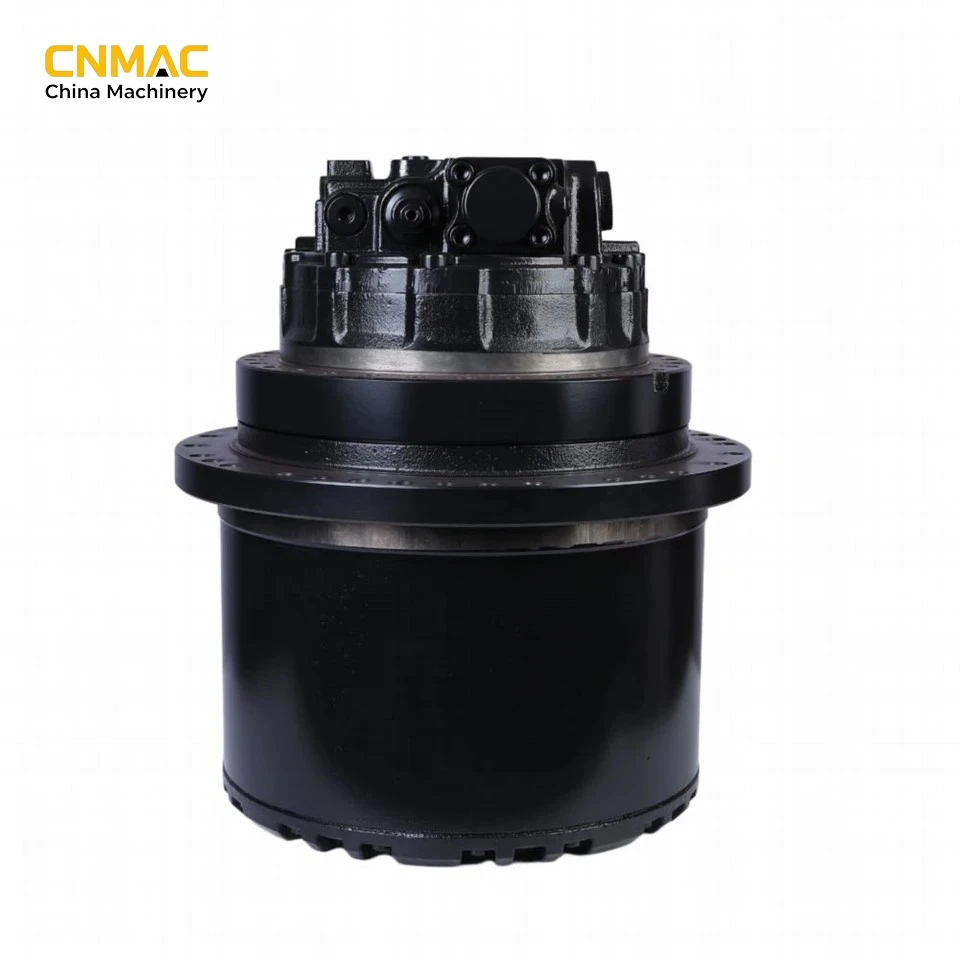

Similarly, our MA23W01 - 333 Hydraulic Motor is tailored to deliver optimal performance at its rated speed, making it suitable for a variety of medium - duty hydraulic applications.
How to Determine the Right Rated Speed for Your Application
To determine the appropriate rated speed for your application, you need to consider the following steps:
First, understand the requirements of your application. Identify the torque and power needed to drive the load. If the application involves moving heavy objects, a motor with a high - torque rating and a relatively low rated speed may be required. If it's a high - speed, low - torque application like a blower, a high - speed motor is more suitable.
Next, consult the motor's performance curves. Most motor manufacturers provide performance curves that show the relationship between speed, torque, power, and efficiency. These curves can help you visualize how the motor will perform under different operating conditions, allowing you to select the motor with the most appropriate rated speed.
It's also advisable to seek the advice of a professional engineer or a motor specialist. They have the knowledge and experience to analyze your specific application and recommend the best motor with the right rated speed.
Real - World Examples of Rated Speed in Motor Applications
In the construction industry, hydraulic motors are commonly used in excavators, loaders, and cranes. For example, our 20 - 28T Swing Motor | MA180W01 - 321036 is designed to provide the necessary torque and speed for the swing mechanism of 20 - 28 ton excavators. The rated speed of this motor ensures smooth and precise rotation of the upper structure of the excavator, enhancing productivity and safety on the job site.
In the manufacturing sector, motors are used in conveyor systems, pumps, and machine tools. The rated speed of these motors is carefully selected to match the speed requirements of the production process. For example, a conveyor belt that needs to move materials at a specific rate requires a motor with a rated speed that can drive the belt at the desired speed.
Impact of Deviating from the Rated Speed
Operating a motor at a speed significantly different from its rated speed can have several negative consequences. If the motor is run at a higher speed than the rated speed, the centrifugal forces acting on the rotor can cause mechanical stress, leading to premature failure of the motor. The bearings may wear out faster, and there is an increased risk of the windings overheating due to increased current draw.
On the other hand, running a motor at a lower speed than the rated speed can also cause problems. The motor may not be able to generate enough torque to drive the load properly, resulting in inefficient operation and potential stalling. In addition, the cooling system of the motor, which is often designed to work at the rated speed, may not function effectively, leading to overheating.
Conclusion and Call to Action
In conclusion, the rated speed of a motor is a fundamental specification that has a significant impact on the performance, efficiency, and reliability of the motor. As a motor supplier, we offer a wide range of motors with different rated speeds to meet the diverse needs of our customers. Whether you need a MAG - 170VP - 3800 Hydraulic Motor for a medium - sized hydraulic system or a 30 - 36T Hydraulic Motor | KYB MAG - 180VP - 6000 for a heavy - duty application, we have the right solution for you.
If you're in the process of selecting a motor for your project or need more information about motor rated speeds, don't hesitate to reach out to us. Our team of experts is ready to assist you in making the best choice for your specific requirements. We can provide detailed product information, technical support, and even customized solutions. Let's start a conversation about how we can help you find the perfect motor for your application.
References
- Chapman, Stephen J. Electric Machinery Fundamentals. McGraw - Hill Education, 2019.
- Fitzgerald, A. E., Kingsley, C., Jr., and Umans, S. D. Electric Machinery. McGraw - Hill, 2003.
- Hydraulic Motors: Principles, Characteristics, and Applications. Industrial Press Inc., 2010.


