



When it comes to heavy - lifting equipment, all - terrain cranes and truck - mounted cranes are two popular choices in the construction and industrial sectors. As an all - terrain crane supplier, I have in - depth knowledge of these two types of cranes and their differences. In this blog, I'll break down the distinctions between all - terrain cranes and truck - mounted cranes to help you make an informed decision for your projects.
Design and Mobility
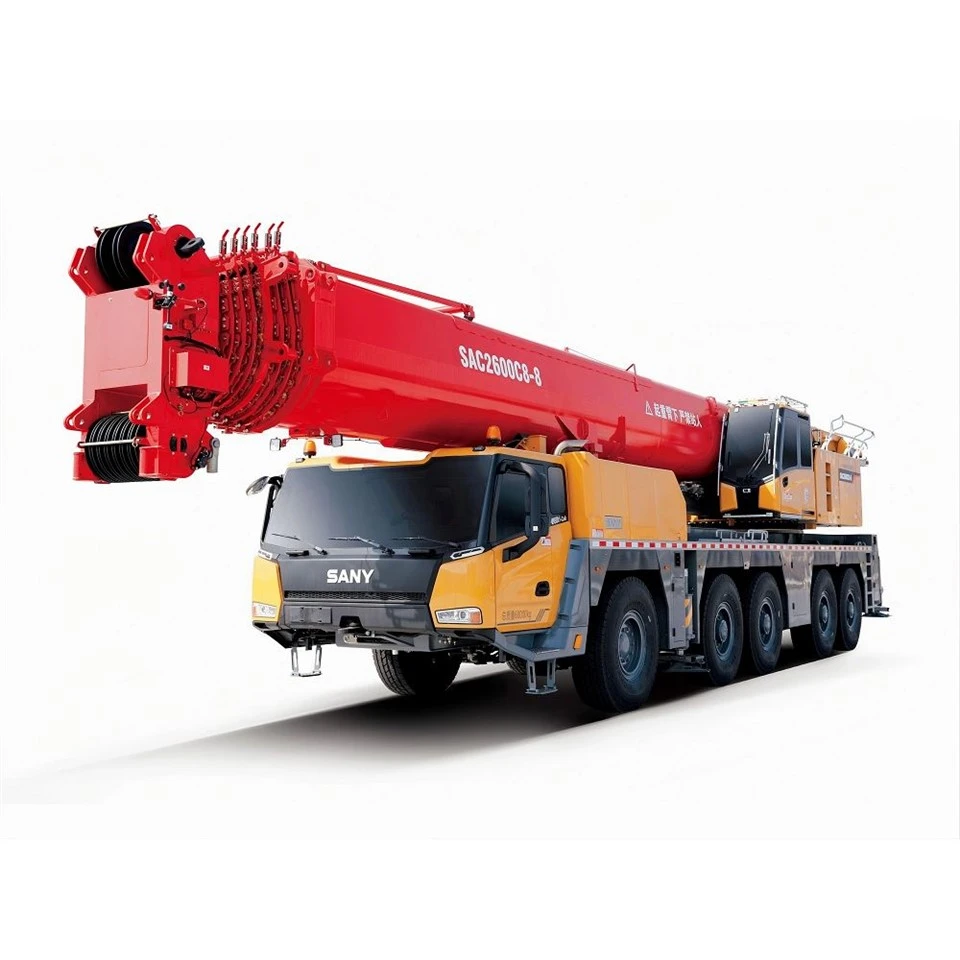
All - terrain cranes are engineered to operate in a wide variety of terrains. They are built on a specialized chassis with multiple axles and advanced suspension systems. This design allows them to travel on both highways and rough off - road terrains. The large, heavy - duty tires and powerful engines enable all - terrain cranes to navigate through mud, gravel, and uneven ground. For example, our 260T All - Terrain Crane | SAC2600C8 - 8 is designed with a robust chassis that can handle the challenges of different terrains, making it suitable for construction sites in remote areas.
On the other hand, truck - mounted cranes are mounted on a standard truck chassis. They are primarily designed for highway travel and are more limited in their off - road capabilities. The truck - mounted design allows for quick mobilization on paved roads, but they may struggle in rough or soft terrains. Their mobility is mainly restricted to areas with good road conditions.
Lifting Capacity
All - terrain cranes generally offer higher lifting capacities compared to truck - mounted cranes. The design of all - terrain cranes allows for larger counterweights and more advanced lifting mechanisms. Our 500T All - Terrain Crane | SAC5000C8 - 8 can lift extremely heavy loads, making it suitable for large - scale construction projects, such as building high - rise buildings or erecting large industrial structures.
Truck - mounted cranes, while they can handle a decent amount of weight, typically have lower lifting capacities. They are more commonly used for smaller - scale projects, such as installing small signs or performing light construction tasks. The lifting capacity of a truck - mounted crane is often limited by the size and strength of the truck chassis.
Setup Time
All - terrain cranes usually require more time for setup. Since they are designed for heavy - duty lifting, they have complex outrigger systems and boom configurations. The outriggers need to be properly extended and leveled to ensure stability during lifting operations. Additionally, the boom may need to be assembled and adjusted according to the specific lifting requirements. This setup process can take anywhere from 30 minutes to a few hours, depending on the complexity of the job.
Truck - mounted cranes, on the other hand, can be set up relatively quickly. They often have simpler outrigger systems and can be ready for operation in a matter of minutes. This makes them a great choice for jobs that require rapid deployment, such as emergency repairs or short - term projects.
Cost
The cost of all - terrain cranes is generally higher than that of truck - mounted cranes. The advanced technology, higher lifting capacities, and ability to operate in various terrains contribute to the higher price tag. The purchase price, maintenance costs, and fuel consumption of all - terrain cranes are all relatively high. However, for large - scale projects where high - capacity lifting and off - road mobility are required, the investment in an all - terrain crane can be well - worth it.
Truck - mounted cranes are more cost - effective in terms of purchase price and operating costs. They are a popular choice for small and medium - sized businesses that need a crane for occasional use or for projects with lower lifting requirements.
Applications
All - terrain cranes are ideal for large - scale construction projects, mining operations, and infrastructure development. Their ability to operate in different terrains and lift heavy loads makes them indispensable in these industries. For example, in a large - scale bridge construction project, an all - terrain crane can be used to lift heavy steel beams and place them in position with precision.

Truck - mounted cranes are commonly used in urban construction, utility work, and small - scale building projects. They are well - suited for tasks such as installing air - conditioning units on rooftops, lifting small construction materials, and performing maintenance work on power lines.
Safety Features
All - terrain cranes are equipped with advanced safety features to ensure the safety of operators and the surrounding environment. These features include load moment indicators, anti - two - block systems, and stability control systems. The load moment indicator monitors the load being lifted and the position of the boom to prevent overloading. The anti - two - block system prevents the hook from colliding with the boom tip, which could cause serious damage or accidents. The stability control system continuously monitors the crane's stability and can automatically adjust the outriggers or limit the lifting capacity if necessary.
Truck - mounted cranes also have safety features, but they may be less sophisticated compared to all - terrain cranes. They typically have basic load - limiting devices and emergency stop buttons. However, the safety of a truck - mounted crane operation also depends on proper operator training and adherence to safety procedures.
Flexibility
All - terrain cranes offer greater flexibility in terms of their lifting range and reach. They can be equipped with different types of booms, such as telescopic booms and lattice booms, which can be adjusted to different lengths and angles. This allows them to reach difficult - to - access areas and lift loads at various heights and distances.
Truck - mounted cranes have a more limited lifting range and reach. Their booms are usually shorter and less adjustable compared to all - terrain cranes. However, they can still be useful for jobs that require quick and easy access to relatively low - height areas.
In conclusion, the choice between an all - terrain crane and a truck - mounted crane depends on your specific project requirements. If you need a crane with high - capacity lifting, off - road mobility, and advanced features for large - scale projects, an all - terrain crane is the better option. On the other hand, if you have smaller - scale projects, need quick setup, and are looking for a more cost - effective solution, a truck - mounted crane may be more suitable.
If you are interested in learning more about our all - terrain cranes or need assistance in choosing the right crane for your project, please feel free to contact us. We are here to provide you with professional advice and support to ensure your project's success.
References
- Crane Industry Handbook
- Construction Equipment Magazine
- Engineering textbooks on heavy - lifting machinery


