


Hey there! As a diesel forklift supplier, I get asked a ton about how to pick the right diesel forklift for a business. It's a big decision, and there are a bunch of factors to consider. So, let's dive right in and break it down.
Understanding Your Business Needs
First things first, you gotta understand what your business actually needs. What kind of goods are you moving? Are they heavy, bulky, or maybe just small and light? The weight and size of the items you'll be handling are super important. For instance, if you're dealing with small packages in a warehouse, a smaller forklift might do the trick. But if you're moving large pallets of heavy machinery, you'll need a more powerful one.
Let's say you're in the construction industry. You'll probably need a forklift that can handle heavy loads and operate on rough terrain. On the other hand, if you're running a small retail store, a forklift with a lower lifting capacity might be sufficient.
Lifting Capacity
One of the most crucial factors is the lifting capacity. This is the maximum weight a forklift can lift safely. You don't want to overestimate or underestimate it. If you choose a forklift with a lifting capacity that's too low, you won't be able to move your heavier items. And if it's too high, you'll end up paying more for a forklift that has more power than you actually need.
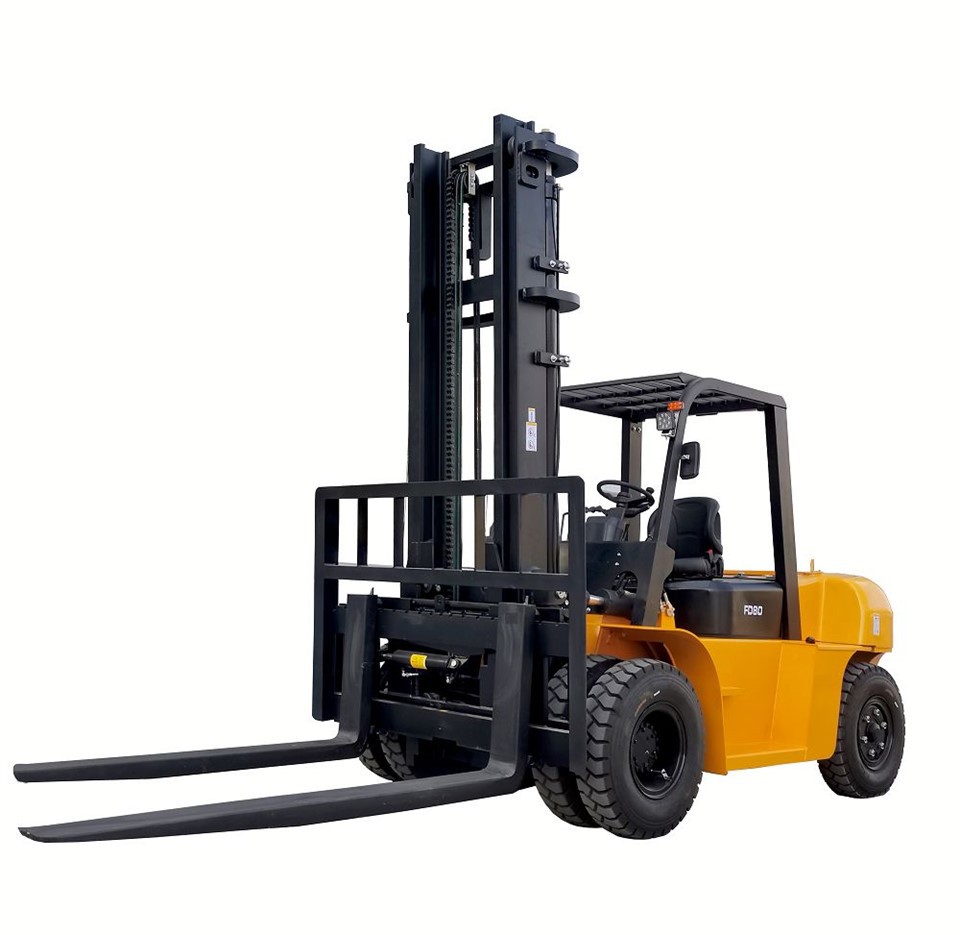
For light-duty tasks, like moving boxes in a small warehouse, a 2T Diesel Forklift | FD20 could be a great choice. It has a lifting capacity of 2 tons, which is perfect for smaller loads. But if you're in a manufacturing plant where you need to lift heavy machinery, you might want to consider a 8T Diesel Forklift | FD80 with an 8-ton lifting capacity.
Operating Environment
The environment where the forklift will be used is also a key factor. Is it an indoor or outdoor environment? If it's indoor, you need to think about things like aisle width and ceiling height. You don't want a forklift that's too big to maneuver in tight spaces.
Outdoor operations, on the other hand, require a forklift that can handle different terrains. If you're working on a construction site, you'll need a forklift with good ground clearance and traction. Our 3.5T Diesel Forklift | FD35 is a great option for outdoor use. It's designed to handle rough terrain and has a decent lifting capacity.
Forklift Features
There are a bunch of features you should look for in a diesel forklift. Some of the important ones include:
- Mast Height: This determines how high the forklift can lift the load. If you need to stack items on high shelves, you'll want a forklift with a taller mast.
- Visibility: Good visibility is crucial for safe operation. Look for a forklift with a clear view of the forks and the load.
- Ergonomics: A comfortable operator is a productive operator. Make sure the forklift has a comfortable seat, easy-to-reach controls, and good legroom.
- Safety Features: Safety should always be a top priority. Look for features like seat belts, horn, and warning lights.
Fuel Efficiency
Diesel forklifts are known for their power, but they can also be fuel-hungry. Fuel efficiency is an important factor to consider, especially if you're using the forklift for long hours. A more fuel-efficient forklift will save you money in the long run.
Maintenance and Support
Like any piece of equipment, diesel forklifts need regular maintenance. Make sure you choose a forklift that's easy to maintain and has good support from the manufacturer. You don't want to be stuck with a forklift that's difficult to repair or has a long lead time for parts.

Cost
Of course, cost is always a factor. You need to find a forklift that fits your budget without sacrificing quality. Keep in mind that the initial cost is not the only thing to consider. You also need to factor in the cost of maintenance, fuel, and training.
Making the Decision
Once you've considered all these factors, it's time to make a decision. Take your time, do your research, and don't be afraid to ask questions. You can also test drive different forklifts to see which one feels the best.
If you're still not sure which forklift is right for your business, don't hesitate to reach out to us. We're here to help you make the right choice. Whether you need a small forklift for a warehouse or a heavy-duty one for a construction site, we've got you covered.
So, if you're in the market for a diesel forklift, give us a shout. We'll work with you to find the perfect forklift for your business. Let's get your operations running smoothly and efficiently!
References
- Industry standards and best practices for forklift selection.
- Manufacturer's specifications and guidelines for diesel forklifts.


