



Hey there! As an engine supplier, I often get asked about the different components of an engine and their functions. One such component that plays a crucial role in the performance of an engine is the intercooler. In this blog post, I'm going to break down what an engine intercooler is and what it does.
First off, let's understand the basic concept of an intercooler. An intercooler is a heat exchanger that's used in engines with forced induction systems, like turbochargers or superchargers. When air is compressed by a turbocharger or supercharger, it gets hot. Hot air is less dense than cold air, which means there's less oxygen available for combustion. And since combustion in an engine requires oxygen, having less oxygen can lead to reduced power output and efficiency.
That's where the intercooler comes in. Its main function is to cool down the compressed air before it enters the engine's intake manifold. By cooling the air, it becomes denser, which means there's more oxygen in the same volume of air. This allows for more fuel to be burned, resulting in increased power and better engine efficiency.
Let's dive a bit deeper into how an intercooler works. There are two main types of intercoolers: air-to-air and air-to-water.
Air-to-Air Intercoolers
Air-to-air intercoolers are the most common type. They work by passing the hot, compressed air through a series of tubes or fins. As the air flows through these tubes, it comes into contact with cooler outside air. The heat from the compressed air is transferred to the outside air, cooling down the compressed air in the process.
These intercoolers are relatively simple in design and are often more cost - effective. They're also easy to install and maintain. However, their performance can be affected by factors like the ambient air temperature and the amount of airflow around the intercooler.
Air-to-Water Intercoolers
Air-to-water intercoolers, on the other hand, use a liquid (usually water) to cool the compressed air. The hot, compressed air passes through a heat exchanger where it transfers its heat to the water. The water then flows to a radiator, where it releases the heat to the outside air.
Air-to-water intercoolers are more efficient at cooling the air compared to air-to-air intercoolers. They can also be more compact, which is useful in engines where space is limited. However, they're more complex in design and require a separate cooling system for the water, which can increase the cost and maintenance requirements.
Now, let's talk about the benefits of having an intercooler in an engine.
Increased Power Output
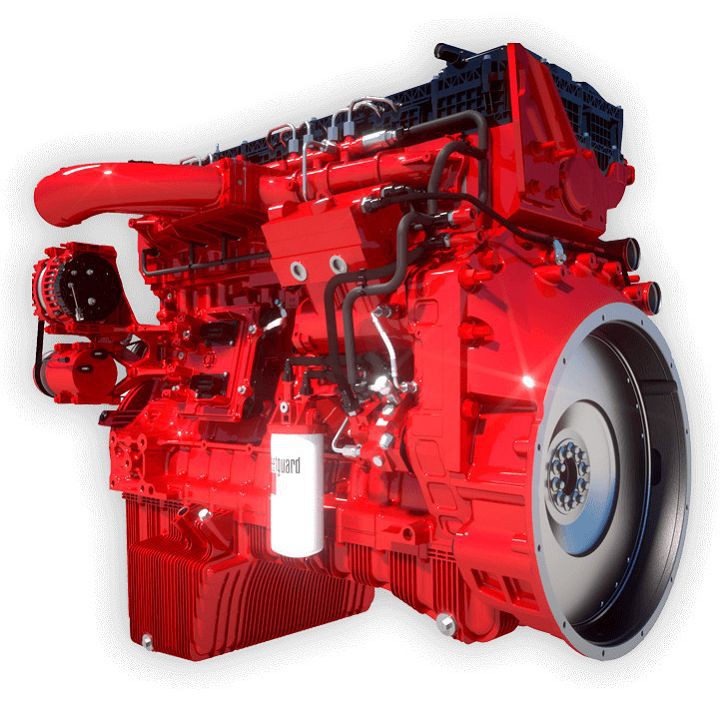
As I mentioned earlier, an intercooler cools the compressed air, making it denser. With more oxygen available for combustion, the engine can burn more fuel, resulting in increased power. This is especially important in high - performance engines where every bit of power matters. For example, in our Cummins Engine M15 (308KW 420HP), the intercooler helps to boost the power output, allowing it to perform at its best.
Improved Fuel Efficiency
When the engine can burn fuel more efficiently due to the increased oxygen supply, it uses less fuel to produce the same amount of power. This means better fuel economy, which is a big plus for both consumers and businesses. Our Cummins Engine L8.9 (164KW 220HP) benefits from an intercooler, which helps to keep the fuel consumption in check.
Reduced Engine Knock
Engine knock is a problem that occurs when the air - fuel mixture in the engine's cylinders ignites prematurely. This can cause damage to the engine and reduce its performance. Cooler air from the intercooler has a higher resistance to premature ignition, which helps to reduce engine knock. Our Cummins Engine L9 (162KW 217HP) is designed with an intercooler to minimize the risk of engine knock.
Extended Engine Life
By reducing the temperature of the compressed air, the intercooler also helps to reduce the overall temperature of the engine. High engine temperatures can cause wear and tear on engine components, leading to a shorter engine life. With an intercooler, the engine operates at a lower temperature, which can extend its lifespan.
In conclusion, an engine intercooler is a vital component in engines with forced induction systems. It helps to increase power output, improve fuel efficiency, reduce engine knock, and extend the engine's life. If you're in the market for an engine, make sure to consider the role of the intercooler and how it can benefit your specific needs.
If you're interested in purchasing an engine or have any questions about our products, feel free to reach out. We're here to help you find the perfect engine for your requirements. Whether you need a high - performance engine for heavy - duty applications or a more fuel - efficient engine for everyday use, we've got you covered.

References
- Automotive Engineering Handbook, various authors
- Engine Performance and Design, SAE International


